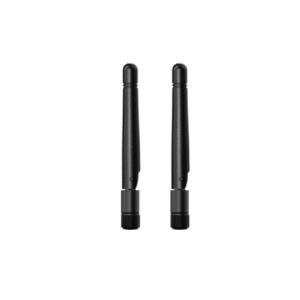
 Hollyland ANTENNAS Wireless Video Device
 Subtotal: ₹590 (incl. VAT)
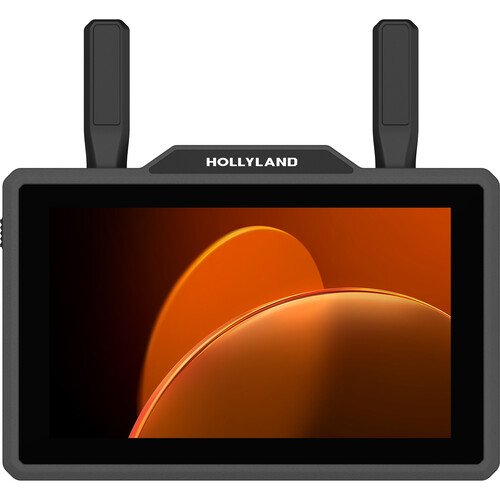
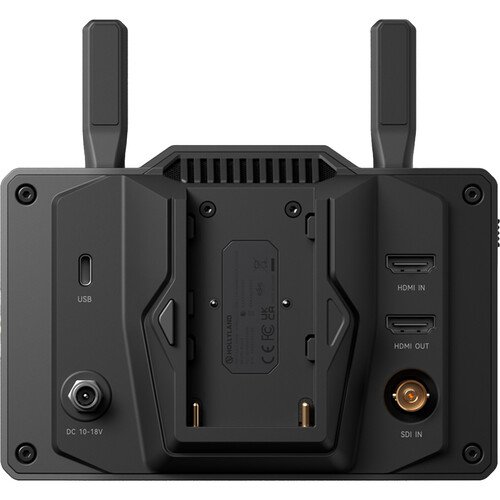
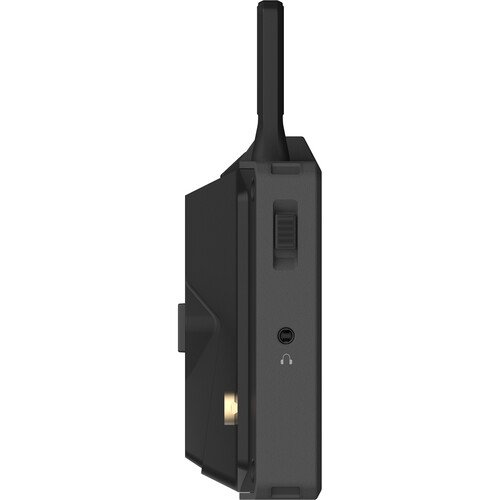
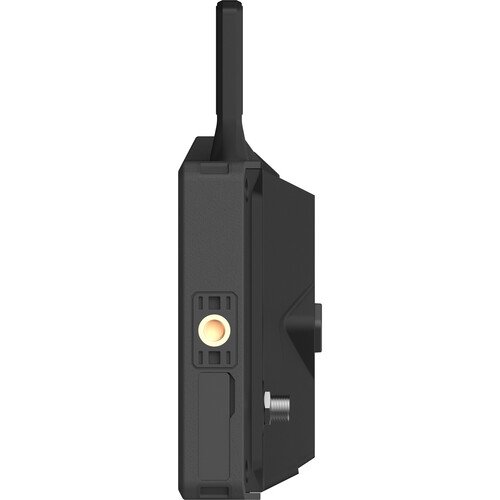
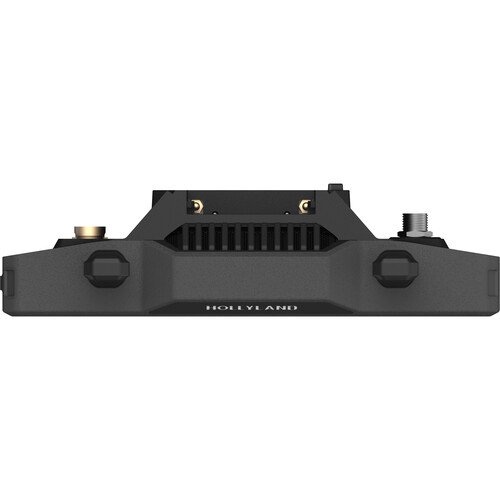
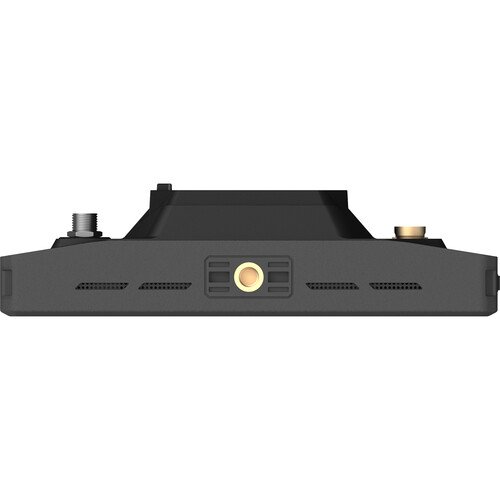
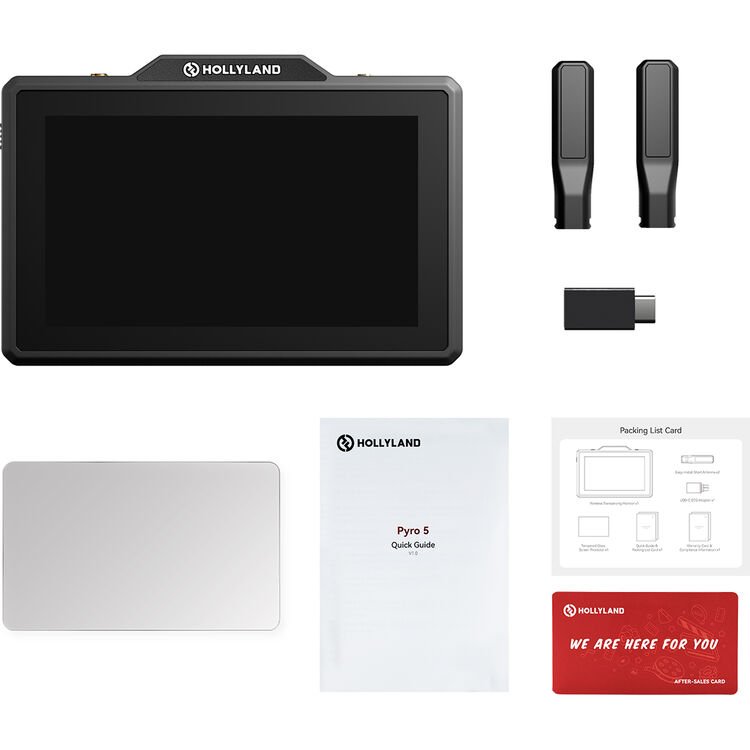
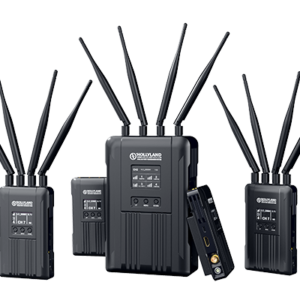
Transmit, receive, and monitor high-quality wireless video transmissions using the versatile Pyro 5 Wireless Transceiver Monitor from Hollyland. The Pyro 5 takes the previous M1 transceiver/monitor and makes everything bigger and better with a bright 5.5″ touchscreen display, L-series battery plate, wireless transmission up to 1312′ away, SD card video recording, HDMI/SDI input/output, RTMP streaming, one Pyro 5 sends to up to four receivers, as well as auto dual-band 2.4/5 GHz hopping and auto-frequency hopping.
Broadcast Mode
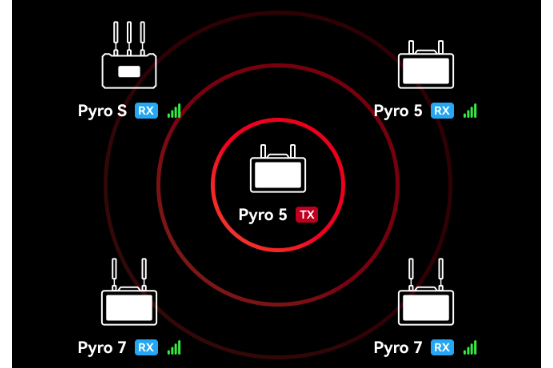
The Pyro 5 features wireless broadcast technology that enables one transmitter to connect to up to four receivers with stable, line-of-sight signals. When Broadcast mode is activated, the transmitter can transmit signals to a maximum of four receivers. When it’s deactivated, the transmitter can transmit signals to up to two receivers and two mobile devices.
Large, Bright Monitor
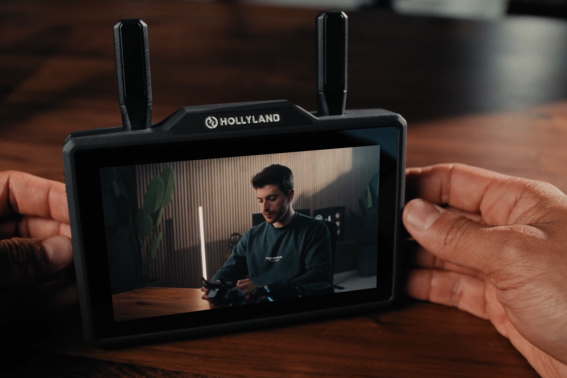
The Pyro 5 features a 5.5″ display with a brightness of 1500 cd/m², so it’s clearly viewable in bright sunlight or dim environments. The screen brightness is adjustable for optimal performance.
Versatile I/O
The Pyro 5 can be switched to operate as either a transmitter or a receiver. When in transmitter mode, the monitor features one HDMI input, one SDI input, and one HDMI loop output. When in receiver mode, it features one HDMI output.
Quick Source Switching
The transceiver enables seamless connection with all Pyro series units using a grouping preset. You can group multiple devices and instantly switch monitoring between two cameras by utilizing two customizable buttons.
Long Transmission Range
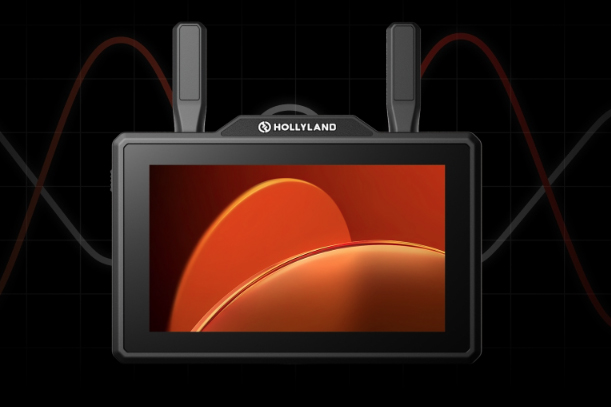
Utilizing dual-band 2.4/5 GHz technology, the Pyro 5 features a stable line-of-sight transmission range of up to 1312′ with a minimal transmission latency of 60ms with no image degradation. There are two transmission modes to choose from: Smooth mode adjusts the transmission for the lowest latency for longer distances, and HD mode optimizes the image with a stable bit rate up to 12 Mb/s, even up to 1312′ away.
Auto Dual-Band Hopping & Smart Channel Selection
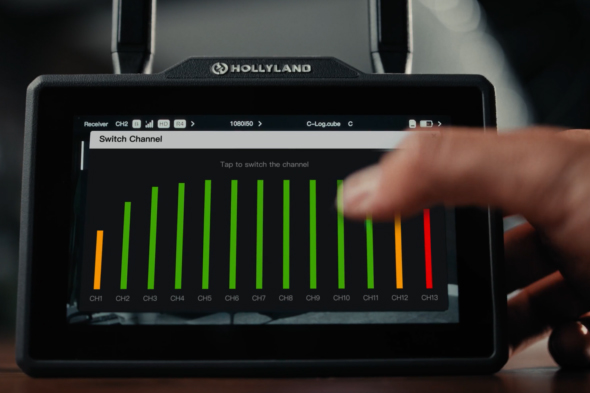
With Auto Dual-Band Hopping (ADH) and Auto Frequency Hopping (AFH) technologies operating on both 2.4 and 5 GHz bands, the Pyro 5 can automatically choose the clearest channel for reliable and uninterrupted wireless video transmission. These technologies address common issues such as signal interference, low transmission efficiency, and frequency congestion. The omnidirectional high-gain antennas also ensure stable signals in all directions. Smart Channel Selection allows you to manually scan and switch frequencies using visual signal strength indicators.
Efficient Proxy Recording
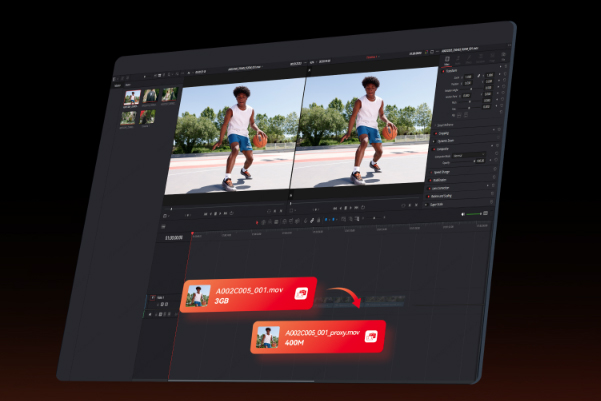
Proxy files can be recorded directly to an SD card or USB thumb drive while monitoring. The proxy files are automatically organized into folders for review or editing. The files include timecode for improved camera syncing.
HD Mode & Smooth Mode
- HD mode delivers 12 Mb/s bit rate video at a 75 ms latency
- Smooth mode dynamically adjusts the bit rate and delivers video at 60 ms for longer distance transmission
RTMP Streaming
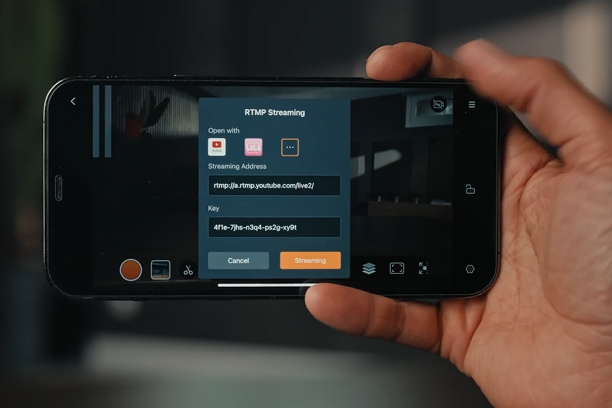
With built-in RTMP streaming, you can easily stream video to popular live broadcast or conferencing platforms like Zoom, YouTube Live, Twitch, TikTok Live, and more.
Video Recording to SD Card
The Pyro 5 features an SD card slot that supports extended MP4 video recording of up to 40 minutes in a single session using an external standard SD card. You can also use an SD card to apply custom LUTs during video export. It features file organization and supports a streamlined editing workflow. You can also import data from external devices and ingest on-set screenshots, overlaying them onto the current recording screen for scene restoration or replication purposes.
Image Tools
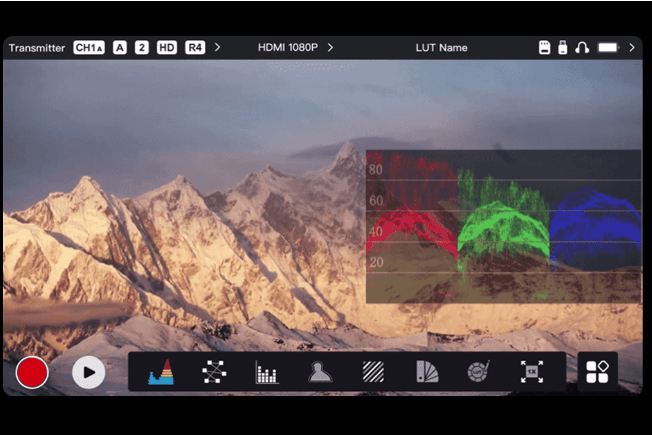
The custom shortcut key feature, which can be used for dual-view monitoring, can also be used to quickly launch image tools such as waveform, recording, focus assist, and other image analysis functions